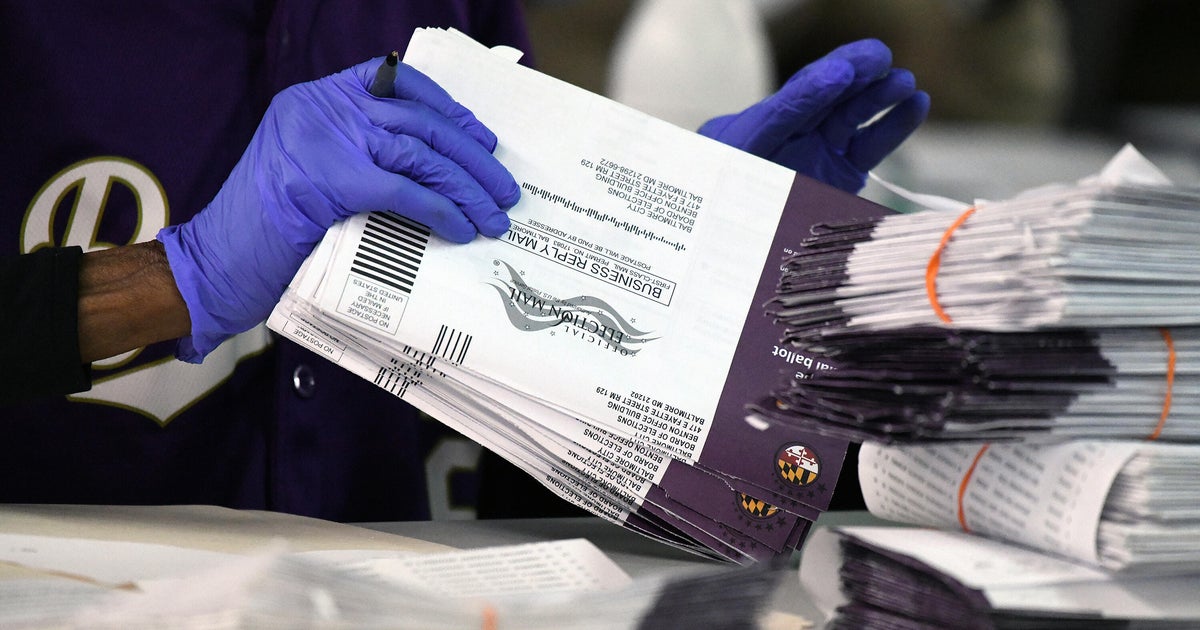
The upcoming midterm elections are poised to be a battleground, but a more fundamental fight for your vote is already underway at the nation's highest court. The U.S. Supreme Court is set to hear a pivotal case that could redefine when your mail-in ballot *actually* counts, sending shockwaves through the electoral process and potentially disenfranchising millions of American voters.
As voters prepare to shape the control of the House and Senate this November, the Supreme Court's decision on *Watson v. RNC* could fundamentally alter how states handle mail ballots postmarked by Election Day but received later. This isn't just a legal debate; it's a direct challenge to a system many states have relied on, especially for those serving abroad or in remote areas.
The High Stakes Showdown: Watson v. RNC
What's the Dispute?
The heart of the matter lies in Mississippi’s deadline for mail-in ballots. Its law, like those in 13 other states and D.C., allows ballots postmarked by Election Day to be counted even if they arrive *after* the official Tuesday deadline. These are known as "grace periods."However, the Republican National Committee (RNC) and Mississippi's state GOP argue these state laws clash with federal statutes from the 1800s that set a uniform Election Day for presidential and congressional races. They contend that "Election Day" means not just when a vote is cast, but when it is *received* by election officials.
This debate re-ignites past controversies around mail-in voting, a method President Trump has frequently criticized as "corrupt as hell." The current administration has also made moves to exert more federal control over elections, though some provisions have faced legal blocks.
Who's Fighting Whom?
The legal challenge, initially brought by the RNC, the state GOP, and Mississippi's Libertarian Party, asserts that allowing a grace period fundamentally misunderstands the definition of Election Day. They argue that the election concludes when ballot boxes are closed, not merely when a voter marks their choice.Defending the state's law is Mississippi Secretary of State Michael Watson, a Republican, who argues that states have the constitutional authority to set their own election rules under the Elections Clause. He insists that voters make their "conclusive" choice by Election Day, regardless of when officials physically receive the ballot.
A Nation Divided on Ballot Deadlines
The "Grace Period" Controversy
While all 50 states require ballots to be *marked* and *submitted* by Election Day, the handling of *receipt* varies wildly:- 14 states and Washington D.C. currently have grace periods.
- 29 states and D.C. accept at least some military and overseas ballots after Election Day.
However, a trend is emerging in the opposite direction. Last year, four states – Kansas, North Dakota, Ohio, and Utah – eliminated their grace periods, now demanding mail ballots be *received* by Election Day to be counted.
The Legal Seesaw
A U.S. district court initially *upheld* Mississippi's law, reasoning it didn't conflict with federal statutes because "election" referred to the voter's final choice.But this decision was reversed by the U.S. Court of Appeals for the 5th Circuit. They ruled that federal law *trumps* Mississippi's grace period, stating that Election Day encompasses both casting and *receiving* ballots. "While election officials are still receiving ballots, the election is ongoing: The result is not yet fixed, because live ballots are still being received," the 5th Circuit panel found. Mississippi officials then appealed this critical decision to the Supreme Court, which agreed to hear the case.
Potential Fallout: Millions of Votes at Risk?
Federalism vs. Uniformity
At its core, this case is a clash over federalism. David Becker, a CBS News election law contributor, explains: "What's at issue here is whether the states have the power under the Constitution to determine that for themselves." Mississippi, in its defense, argues that states have the constitutional authority to set their own rules for federal elections, reflecting a long-standing system of distributed power.Conversely, the RNC argues that Congress set a uniform Election Day precisely to *avoid* a chaotic "patchwork" of different deadlines, ensuring consistency across the nation.
A Dire Warning for Military & Overseas Voters
Perhaps the most alarming consequence of a Supreme Court ruling against grace periods could be the disenfranchisement of a massive demographic: nearly 4 million servicemembers and U.S. citizens living abroad. These individuals heavily rely on mail ballots, often facing significant delays due to logistics."If the Supreme Court decides to read into the Constitution a requirement that election officials have ballots in their hands by Election Day, I don't know how they carve out an exception for military and overseas voters," Becker warned. "There's nothing in the Constitution that says that... I think it could possibly imperil the people who are serving our nation overseas... They could be disenfranchised as well."
This case is one of three critical election-related disputes before the Supreme Court this term, all with the potential to dramatically reshape voting rights and the rules governing campaigns and elections across America.
Key Takeaways
| Aspect | Details |
|---|---|
| Case Name | Watson v. RNC |
| Central Issue | Whether states can count mail ballots postmarked by, but arriving after, Election Day. |
| Key Players | Mississippi (defending grace period), RNC (challenging it), Supreme Court. |
| Potential Impact | Could affect mail-in ballot counting in 14 states (+D.C.) and jeopardise 29 states' ability to count military/overseas ballots. |
| Core Argument | What defines "Election Day": when a vote is cast, or when it is received by officials? |
Your Burning Questions Answered: FAQ
Q1: What is Watson v. RNC about?
It's a Supreme Court case challenging Mississippi's law that allows mail ballots postmarked by Election Day to be counted even if they arrive several days later. The RNC argues this conflicts with federal statutes setting a uniform Election Day.
Q2: What is a "grace period" for mail ballots?
A grace period is a state law allowing mail-in ballots postmarked on or before Election Day to be counted even if they are received by election officials after Election Day. The duration of this grace period varies by state.
Q3: How many states use grace periods, and how many could be impacted?
Currently, 14 states and the District of Columbia have grace periods for mail ballots. Additionally, a ruling against grace periods could jeopardize the laws of 29 states and D.C. that accept at least some military and overseas ballots after Election Day.
Q4: What's the biggest concern if the Supreme Court eliminates grace periods?
The primary concern is the potential disenfranchisement of millions of voters, especially military personnel and U.S. citizens living abroad, who heavily rely on mail ballots and often face postal delays beyond their control.
Q5: What's the core legal argument?
The case hinges on the interpretation of "Election Day." Mississippi argues it refers to when a voter casts their ballot, while the RNC argues it encompasses both casting and receipt of the ballot by election officials.
