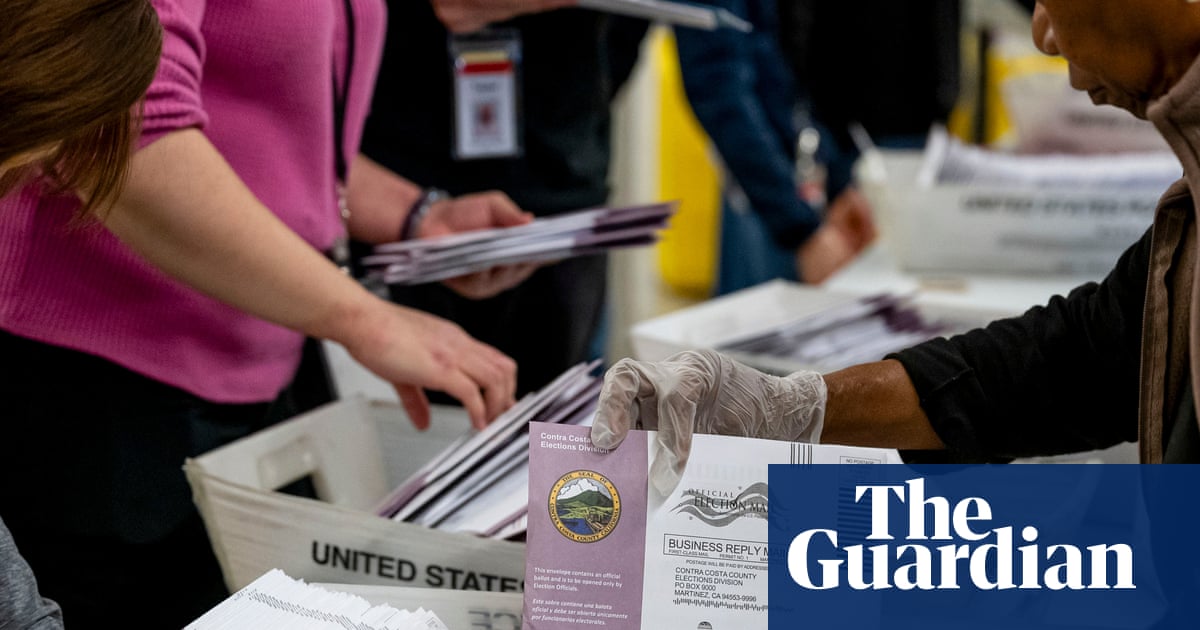
America's Election Day Hangs in the Balance: Supreme Court Weighs Landmark Ballot Case
The U.S. Supreme Court is on the verge of a **monumental decision** that could redefine how votes are counted across the nation, directly impacting laws in **more than a dozen states** and U.S. territories. On Monday, justices appeared ready to significantly curtail the counting of mail-in ballots received *after* Election Day, even if postmarked on time. This isn't just a legal debate; it's a **high-stakes battle over the future of American elections** during a critical midterm year.
At the heart of the matter is the case of *Watson v Republican National Committee*, a challenge brought by the RNC against a Mississippi law. This law, enacted in 2020 during the COVID-19 pandemic, permits mailed ballots to be counted if they arrive within five business days of Election Day, provided they bear an Election Day postmark. While seemingly specific to Mississippi, the court's questions made it clear: this case has **national implications**, threatening similar 'grace period' laws nationwide.
The Core Battle: States' Rights vs. Federal Election Day
Conservative Push for Strict 'Election Day' Receipt
The conservative majority on the court **pressed Mississippi's solicitor general, Scott G. Stewart**, on whether Congress intended to outlaw ballots arriving post-Election Day. They posed hypotheticals, including scenarios of lengthy grace periods, and questioned the limits of counting votes days or even weeks later. Justice Samuel Alito highlighted concerns about "election confidence" being "seriously undermined" if outcomes radically shift after initial Election Night tallies – a sentiment reminiscent of **Trump-era 'election fraud' narratives**.
Justices even explored the bizarre hypothetical of voters recalling their ballots to change votes – a practice Stewart quickly dismissed as having "nobody cited a single example in history."
Liberal Justices Defend State Flexibility & Voter Access
On the other side, liberal justices posed **friendlier questions to Mississippi**, emphasizing the historical dynamism of election administration and states' wide latitude in setting procedures. They pointed to other federal laws, like the **Uniformed and Overseas Citizens Absentee Voting Act (UOCAVA)**, which *already* acknowledge and facilitate such grace periods for specific voter groups.
Justice Elena Kagan starkly summarized the RNC's argument: "You’re basically saying there are two things that have to happen, and they have to happen on election day, and it’s the casting of the vote and the receipt of the vote." This stance **directly challenges existing practices** that have long allowed ballots cast by Election Day to be received and processed afterward.
The National Fallout: What's at Stake for Millions?
14+ States & Territories Face an Uphill Battle
A ruling against Mississippi could have **devastating effects** on voter access and election administration in at least 14 states, Washington D.C., and three U.S. territories that rely on similar grace period laws. Some of these states even allow for longer grace periods and **don't require postmarks**, making their laws even more vulnerable.
The RNC's Election Integrity Communications Director, Ally Triolo, reiterated their stance: "ballots must be received by Election Day." She argued this prevents elections from "dragging on for days and weeks... causing confusion and undermining our elections."
Voting Rights & Military Voters Caught in the Crossfire
A coalition of voting rights advocates, including groups representing **military voters and overseas citizens**, have filed briefs supporting Mississippi's position. They argue that grace periods are **essential** for voters facing unique logistical burdens, ensuring their voices are counted. "The logic of the Fifth Circuit’s ruling in this case would upend multiple, long-established state laws that specifically use grace periods to alleviate the unique barriers to voting faced by U.S. military and overseas voters," an amicus brief stated.
Mississippi, a red state, is **defending its right to set its own election procedures**, asserting that federal law only requires ballots to be *cast* by Election Day, not necessarily *received* by then.
The Unintended Consequences: Who Really Loses?
Republicans' Complicated Relationship with Mail Voting
National Republicans, including former President Donald Trump, have a **strained relationship with mail voting**. While some advocate for a full ban, others recognize that a significant portion of *their own voters* utilize mail-in ballots. Ironically, a decision to eliminate grace periods could **inadvertently hurt Republican candidates** by disenfranchising their own supporters who rely on these extended counting windows.
Beyond Election Day: The Reality of Ballot Processing
It's crucial to remember that even ballots arriving *before* or *on* Election Day often take days to count. The intricate process of **signature verification** and, in some states, allowing voters to 'cure' flagged ballots, means that final tallies frequently extend beyond Election Night. This case isn't just about 'late' ballots, but the very **timeline of election finalization**.
Key Takeaways from the SCOTUS Hearing:
| Key Aspect | Details |
|---|---|
| The Case | Watson v Republican National Committee, challenging Mississippi's 5-day post-Election Day ballot receipt window. |
| Core Debate | Whether federal law requires ballots to be *received* by Election Day, or merely *cast* by then. |
| National Impact | Could invalidate similar grace period laws in 14 states, Washington D.C., and 3 U.S. territories. |
| Conservative View | Expressed skepticism about late ballots, emphasized 'election day' receipt, and raised 'election integrity' concerns. |
| Liberal View | Defended state leeway, cited historical precedent, and acknowledged federal laws like UOCAVA supporting grace periods. |
| Advocates' Stance | Voting rights and military voter groups support Mississippi, arguing grace periods are vital for those with unique burdens. |
| Potential Outcome | A ruling for the RNC could significantly reduce mail-in ballot counting windows nationwide, potentially disenfranchising voters. |
FAQ: Your Questions Answered
Q: What is a 'grace period' for mail-in ballots?
A: A grace period is a state law that allows mail-in ballots to be counted even if they arrive a few days *after* Election Day, provided they were postmarked by Election Day. This is designed to ensure all legally cast votes are counted, especially for those facing postal delays or unique circumstances.
Q: How many states currently have these grace period laws?
A: As of the Supreme Court hearing, at least 14 states, Washington D.C., and three U.S. territories have similar laws allowing for late-arriving ballots to be counted.
Q: Why is the Republican National Committee challenging this law?
A: The RNC argues that ballots must be *received* by Election Day to prevent elections from dragging on, causing confusion, and undermining public confidence in election outcomes. They contend that federal law sets Election Day as the final day for both casting and receiving votes.
