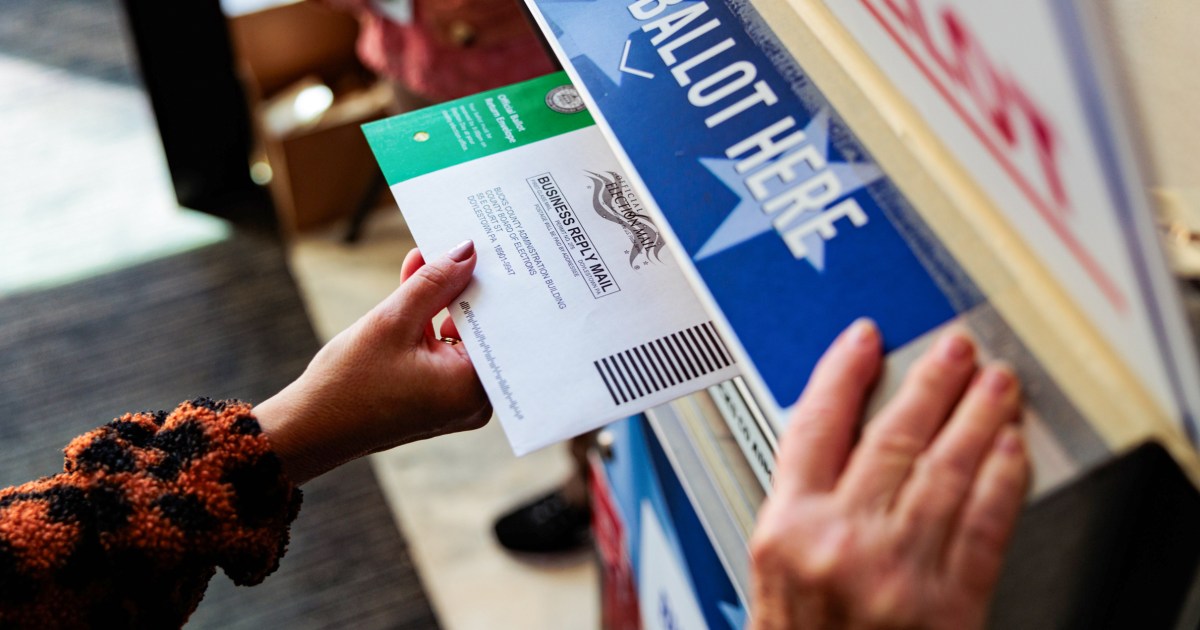
SCOTUS Ignites Election Firestorm: Is Your Mail-In Vote Safe?
The Supreme Court just ignited a powder keg, throwing the future of millions of votes—and potentially the upcoming midterm elections—into immediate jeopardy. At the heart of the controversy is a crucial question: when is a mail-in ballot actually counted? While most states require ballots to be postmarked by Election Day, a fierce legal battle is raging over whether they must also arrive by Election Day.
This seismic debate, unfolding in Washington, directly challenges laws in at least 14 states, including electoral heavyweights like California, New York, and Texas. With President Donald Trump ramping up his rhetoric against mail-in voting, claiming (without evidence) that it leads to “rigged” elections, the stakes couldn't be higher. This isn't just a technicality; it's about the very integrity of American democracy.
The Battle for Your Ballot: Postmark vs. Post-Election Day Receipt
The justices are currently scrutinizing a Mississippi law that permits mail-in ballots to be counted up to five days after Election Day, as long as they were postmarked by the deadline. This mirrors measures in a dozen other states, creating a direct conflict with those who argue that all votes must be received by the close of Election Day.
The outcome could have profound implications for the upcoming November midterms, where control of the House and Senate hangs in the balance. An NBC News poll already shows Democrats with a slight lead, amplifying the pressure on election rules. The court's decision could literally shift the balance of power.
A National Showdown: State Laws Under Threat
Mississippi's law, while allowing a five-day grace period, typically limits mail-in ballot eligibility to specific groups, such as the elderly and disabled. If the Supreme Court were to strike down this statute, it would create chaos, upending election rules not only in the affected states but also for hundreds of thousands of overseas voters, including active-duty military personnel.
According to a brief filed by former national security officials, 29 states currently allow extended deadlines for ballots from voters abroad and the military. Four Republican states have recently moved to bar the counting of late-arriving ballots, signaling a clear partisan divide on this critical issue.
Who's Fighting Whom? A Republican Rift and a Historic Precedent
In a surprising twist, Mississippi’s Republican Attorney General is actually defending the state’s law, placing him in direct opposition to the Republican National Committee (RNC) and Mississippi's own Republican Party, who are challenging the measure. The Libertarian Party of Mississippi has also joined the challenge, adding another layer of complexity to this already tangled legal web.
The legal question revolves around a federal law that designates Election Day as the Tuesday after the first Monday in November. Challengers argue this means ballots must be both cast and received by that date. Defenders counter that nothing in federal law prevents states from extending the receipt deadline, as long as votes were cast on time.
Those defending the law point to a crucial historical precedent: relaxed receipt deadlines for overseas voters in Florida were instrumental in George W. Bush’s victory in the closely contested 2000 presidential election. This shows just how impactful these deadlines can be.
Key Takeaways: The Future of Your Vote
| Issue | Supreme Court weighing states' ability to count mail-in ballots that arrive after Election Day but were postmarked on time. |
| SCOTUS Focus | A Mississippi law allowing up to five days post-Election Day for ballot receipt. |
| Stakes | Impact on midterm elections, voter access, military/overseas votes, and election integrity nationwide. |
| Key Arguments | Challengers: Federal law means receipt by Election Day. Defenders: States can extend receipt deadlines if votes cast by Election Day. |
| Potential Impact | Could upend election rules in 14 states and for millions of voters, including military personnel abroad. |
FAQ: Your Questions Answered
Q1: What exactly is the Supreme Court deciding?
A1: The Court is determining whether states can count mail-in ballots that are postmarked by Election Day but arrive at election offices sometime after Election Day itself.
Q2: How many states could be affected by this ruling?
A2: At least 14 states, including Mississippi, California, New York, and Texas, have laws similar to the one being reviewed. Additionally, 29 states allow extended deadlines for military and overseas voters, which could also be impacted.
Q3: What's the main legal argument against counting late-arriving ballots?
A3: Challengers argue that a federal law setting Election Day implies ballots must be received, not just cast, by that date. They also claim there's no historical tradition for states allowing late-arriving votes.
Q4: What about military voters? Could they be disenfranchised?
A4: Yes, a ruling against extended deadlines could disproportionately affect military personnel and other overseas voters who often rely on longer mail transit times. Many states specifically accommodate these voters.
Q5: When can we expect a decision from the Supreme Court?
A5: The justices are currently hearing arguments. While a specific timeline isn't set, decisions in major cases often come towards the end of their term, typically by late spring or early summer, but given the urgency of election-related cases, it could be sooner.
