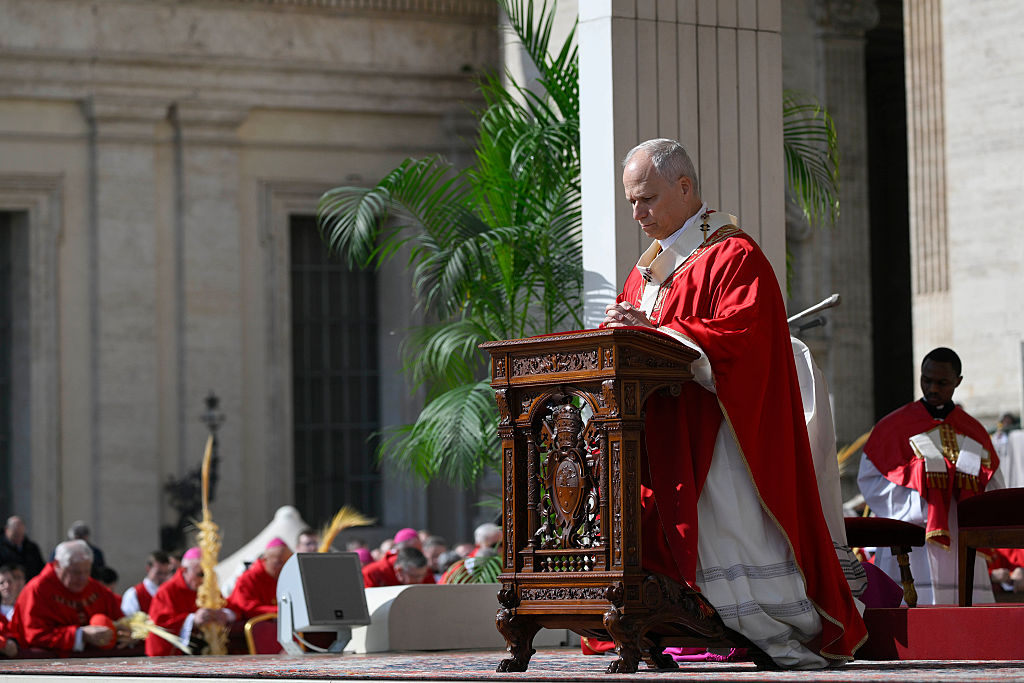
In an explosive Palm Sunday sermon shaking the foundations of global politics, Pope Leo XIV delivered a searing, unprecedented condemnation of war, declaring that God Himself **“rejects the prayers”** of leaders who unleash violence, even as the brutal conflict with Iran spirals dangerously. Speaking from the heart of the Vatican to a **massive crowd** in St. Peter’s Square, the Pontiff’s 10-minute homily framed Jesus not as a conqueror, but as a **“King of Peace.”** This powerful message arrived amidst Holy Week, Christianity’s most sacred period focused on sacrifice and redemption, transforming the address into a direct, moral intervention on the global stage.
God ‘Hides His Eyes’ from War-Mongers
Pope Leo XIV left no room for ambiguity: **“God does not accept the prayers of those who choose violence.”** This wasn't merely a call for peace; it was a clear, unambiguous denunciation of using faith to sanctify war or justify political power. The message carries an extraordinary weight, echoing a stark biblical warning from Isaiah 1:15, where God rejects the prayers of those with **“hands full of blood.”** “When you spread out your hands in prayer, I hide my eyes from you. Even when you offer many prayers, I am not listening. Your hands are full of blood!” the ancient text warns, a chilling parallel to the Pope’s modern-day rebuke.A Direct Challenge Amid Escalating Conflict
The timing of Pope Leo XIV's remarks couldn't be more critical. The war involving Iran continues to **escalate,** stoking fears of a broader regional conflagration and sparking intense debate among leaders in the United States and worldwide. Worryingly, some officials have begun framing the conflict in **dangerous religious or civilizational terms** — a narrative the Pope’s sermon implicitly and powerfully challenged.Global Backlash and 'No Kings' Protests
This papal intervention also coincides with a growing **public backlash** against the war. Across the United States and internationally, large-scale **“No Kings” protests** have erupted, with demonstrators voicing profound concerns over both foreign policy decisions and domestic political priorities. The Vatican, while historically advocating for peace, has never before issued such a sharply clear condemnation, not just of war itself, but of the very idea that faith can be perverted to legitimize it.| Point | Details |
|---|---|
| Unprecedented Rebuke | Pope Leo XIV explicitly stated God “rejects the prayers” of leaders who wage violence. |
| 'King of Peace' Theme | Homily centered on Jesus as a peaceful leader, fundamentally challenging war justifications. |
| Biblical Backing | Cited Isaiah 1:15, where God refuses to listen to those whose hands are “full of blood.” |
| Critical Timing | Delivered during Holy Week amidst escalating Iran conflict and global 'No Kings' protests. |
| Challenging Justification | Directly countered attempts to frame the conflict in religious or civilizational terms. |
FAQ: Decoding the Pope's Powerful Message
Q: Who is Pope Leo XIV?
A: Pope Leo XIV is the current spiritual leader of the Roman Catholic Church, a global religious figure whose pronouncements carry significant moral weight for billions worldwide.
Q: Why is Holy Week significant to this message?
A: Holy Week, culminating in Easter, is the most sacred time in the Christian calendar, focusing on themes of sacrifice, suffering, and redemption. Delivering a strong anti-war message during this period amplifies its moral gravity and urgency.
Q: What is the significance of calling Jesus a 'King of Peace'?
A: This emphasizes a non-violent, spiritual leadership, directly contrasting with earthly rulers who wage war and implicitly challenging any religious justification for military aggression or political power achieved through conflict.
Q: What are the 'No Kings' protests mentioned?
A: The 'No Kings' protests are large-scale demonstrations, both in the U.S. and internationally, where citizens voice opposition to the ongoing conflict with Iran and related foreign policy decisions, often linking them to domestic political concerns.
Q: How does this statement differ from past Vatican calls for peace?
A: While the Vatican routinely calls for peace, Pope Leo XIV's latest address is distinguished by its **sharp clarity and directness**. It's not just a general call for peace, but a specific, moral condemnation that rejects the very premise that faith can be used to justify or sanctify violence and war.
