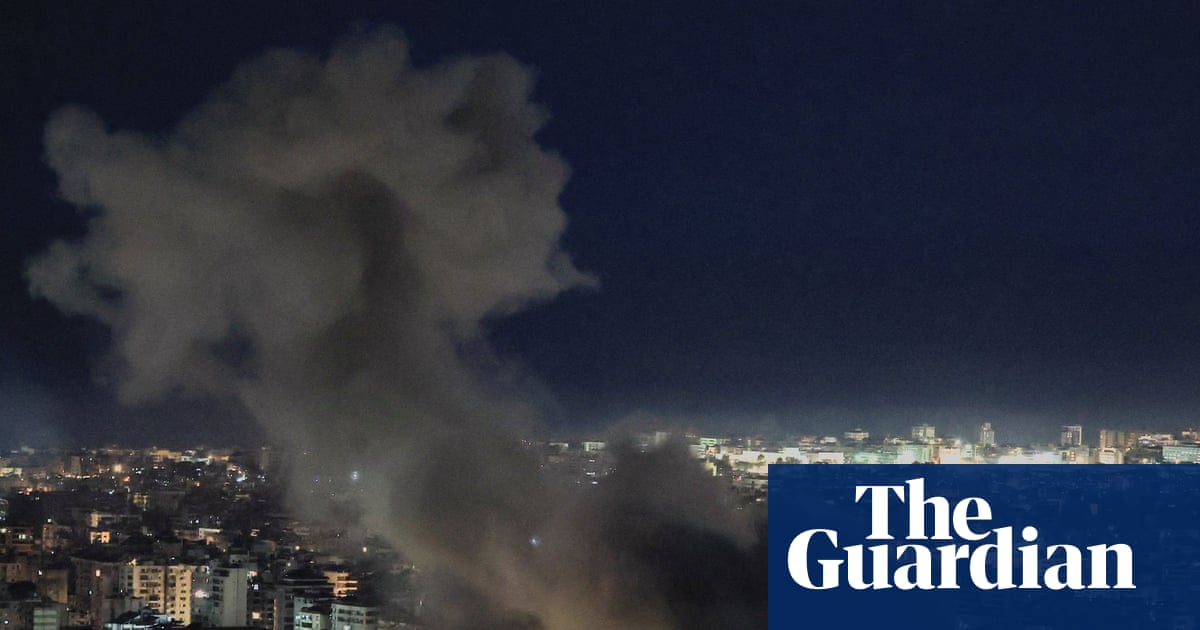
The Middle East is teetering on the precipice of an unimaginable abyss. Today, panic gripped Beirut as over half a million residents fled under the shadow of unprecedented Israeli airstrikes, while Iran unleashed a relentless barrage of retaliatory attacks across the region. The world watches, breathless, as a conflict already spanning 14 nations threatens to ignite a global inferno.
Beirut in Chaos: Half a Million Flee Under Israeli Threat
In a scene reminiscent of past conflicts, but on an unprecedented scale, Israel launched massive strikes against the southern suburbs of Beirut, specifically Dahiya, just hours after ordering the area's entire population – more than 500,000 people – to evacuate immediately. The Israel Defense Forces (IDF) warned residents to “save your lives and evacuate your homes immediately,” triggering a desperate exodus.
Footage captured smoke billowing over Dahiya, a neighborhood Israeli’s far-right finance minister, Bezalel Smotrich, chillingly vowed would “look like Khan Younis” – referring to a section of Gaza almost entirely destroyed by Israeli bombs. The order encompassed areas with several hospitals and government ministries, compounding the humanitarian crisis.
Traffic came to a standstill, forcing thousands to abandon vehicles and walk, with families pushing strollers through bumper-to-bumper congestion. Desperate appeals were made for rescue services to assist elderly residents unable to flee on their own. The IDF even provided pre-approved escape routes, a tactic disturbingly similar to those used during evacuations in Gaza.
This rapid escalation followed Hezbollah's missile and drone attacks on Israel earlier in the week. The human toll is already devastating: at least 102 people killed and 638 injured in Lebanon by Israeli airstrikes. The war, now in its sixth day, has also claimed over 1,230 lives in Iran, approximately a dozen in Israel, and six US soldiers.
Iran Unleashes Fury: Regional Retaliation and Global Fallout
As Beirut descended into panic, Tehran launched its own wave of retaliatory airstrikes against Israel and US bases across the region. US Defense Secretary Pete Hegseth ominously promised a “further escalation,” warning, “If you think you’ve seen something, just wait.”
Iran expanded its campaign, firing ballistic missiles towards Israel, striking an airport in Azerbaijan, and even hitting targets as far as Cyprus. This escalating conflict has created the world’s largest travel disruption since COVID-19, with countries shutting down airspaces, and has caused global oil prices to spike dramatically.
Gulf nations reported a barrage of incoming Iranian projectiles, with targets reportedly aimed at US personnel and bases. A drone was shot down near Al Dhafra airbase in the UAE, injuring six from shrapnel. Qatar reported a missile attack on Doha, and Saudi Arabia intercepted a drone. A tanker off Kuwait’s coast was also attacked.
In Azerbaijan, a drone strike near an airport in Nakhchivan, bordering Iran, wounded four people, while another fell near a school. President Ilham Aliyev condemned Iran’s “groundless act of terror and aggression” and vowed retaliation, a claim Tehran swiftly denied. Simultaneously, Iran intensified strikes on Iranian Kurdish forces in northern Iraq.
Trump's Controversial Interventions and Khamenei's Legacy
Amidst the escalating violence, former President Donald Trump made a series of audacious claims from the White House. He offered members of the Islamic Revolutionary Guards Corps (IRGC) and Iran’s military/police immunity if they disarmed, but otherwise faced “guaranteed death.”
Trump also asserted he should be involved in choosing Iran’s next supreme leader, following the US-Israeli airstrike that killed Ayatollah Ali Khamenei on the war's first day. He declared Mojtaba Khamenei, the late leader's 56-year-old son, an “unacceptable” choice. “We want to be involved in the process of choosing the person who is going to lead Iran into the future,” Trump told Reuters.
Further unsettling revelations came from Israeli Defense Minister Israel Katz, who stated the decision to assassinate Khamenei was made in November, long before the breakdown in nuclear program negotiations. Katz claimed the original timeline was for mid-2026, but Netanyahu moved it up after riots broke out in Iran. This disclosure could bolster critics who argue Israel had dragged the US into a large war in the Middle East.
US Secretary of State Marco Rubio affirmed that the US launched its strike on Iran expecting retaliation after the Israeli attack. Katz further escalated rhetoric by declaring Khamenei’s successors would be “unequivocal targets for elimination.”
Naval Warfare: US Sub Sinks Iranian Warship
The conflict extended to the seas, with Sri Lanka reporting its navy recovered at least 87 bodies after a US submarine sank the Iranian warship, IRIS Dena, on Wednesday. Thirty-two sailors were rescued from a crew of almost 130, and another Iranian vessel was reported in Sri Lankan waters, details undisclosed.
Iran’s Foreign Minister, Abbas Araghchi, reacted with fury, accusing the US of an “atrocity of sea” and vowing the US would “bitterly regret [the] precedent it has set.” A senior Iranian cleric went further on state TV, calling for the exacting of “Trump’s blood.”
Key Takeaways
| Key Event | Impact |
|---|---|
| Beirut Exodus | Over 500,000 residents fled southern Beirut amidst unprecedented Israeli strikes, sparking fears of a humanitarian crisis. |
| Iran's Retaliation | Tehran launched widespread attacks against Israel and US bases, expanding the conflict's reach to Azerbaijan, Cyprus, and Gulf nations, causing global disruption and oil price spikes. |
| US/Israel Escalation | US Secretary of Defense hinted at "further escalation" as US-Israel forces continue bombarding Iranian targets. |
| Trump's Influence | Former President Trump offered immunity to Iranian forces and claimed a role in selecting Iran's next Supreme Leader, following the assassination of Ayatollah Ali Khamenei. |
| Naval Conflict | A US submarine sank an Iranian warship, IRIS Dena, off Sri Lanka, leading to furious condemnation from Tehran and heightening maritime tensions. |
Frequently Asked Questions (FAQ)
- Q: What caused the mass evacuation in Beirut?
- A: Israel ordered over 500,000 residents of southern Beirut to "save your lives and evacuate your homes immediately" before launching massive airstrikes against what it claimed were Hezbollah targets.
- Q: How wide-reaching is the current conflict?
- A: The conflict has rapidly expanded, now affecting at least 14 countries across the Middle East and beyond, including Lebanon, Iran, Israel, Azerbaijan, Cyprus, Iraq, UAE, Qatar, Saudi Arabia, Kuwait, and even maritime incidents near Sri Lanka.
- Q: What is the significance of Ayatollah Ali Khamenei's assassination?
- A: His death marks a critical turning point. Israeli Defense Minister Israel Katz revealed the decision was made months ago, predating nuclear talks, and that his successors would also be "unequivocal targets for elimination." Former President Trump also weighed in on choosing his replacement.
- Q: Has the conflict impacted global markets or travel?
- A: Yes, Iran's expanded campaign of strikes has led to widespread airspace closures, causing the world's largest travel disruption since COVID-19 and a significant spike in global oil prices.
- Q: What is the US role in this conflict?
- A: The US is heavily involved, conducting joint bombardments with Israel against Iranian targets, and a US submarine sank an Iranian warship. US Defense Secretary Pete Hegseth has also promised "further escalation."
