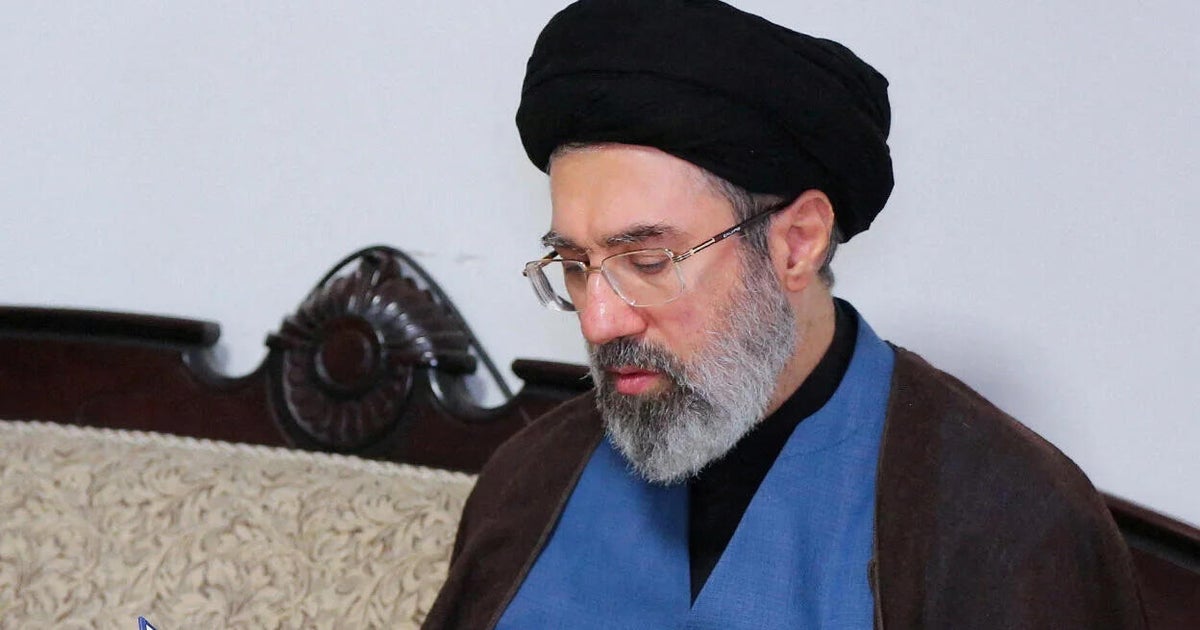
In a stunning revelation that shakes the very foundations of Iran's new leadership, explosive U.S. intelligence reports indicate that the late Supreme Leader, Ayatollah Ali Khamenei, harbored profound doubts about his own son, Mojtaba Khamenei, ever ascending to power. This bombshell comes just as the younger Khamenei takes the helm of a nation reeling from war and a power vacuum, raising urgent questions about the stability and legitimacy of Iran's future.
A Dynasty Nobody Wanted? The Shocking Intel on Iran's New Supreme Leader
Multiple high-level sources, including individuals within the U.S. administration, the intelligence community, and close to President Trump, have confirmed that U.S. intelligence circulated critical analyses to the President and his inner circle. These analyses revealed that the elder Khamenei was deeply wary of his son, Ayatollah Mojtaba Khamenei, ever assuming the top leadership role.
The reasons? Mojtaba was reportedly perceived as not very bright, widely viewed as unqualified to be leader, and struggled with significant personal life issues. Despite these profound misgivings from his own father, Mojtaba, 56, was selected just last weekend by Iran's council of religious clerics to become the new Supreme Leader, a position he assumed after years as a close aide to his father.
This controversial succession follows the dramatic death of Ali Khamenei, who was killed approximately eight days earlier in an Israeli missile strike—an opening salvo in the escalating U.S. and Israel's war with Iran. Mojtaba himself is believed to have been injured in that very strike, though his exact condition remains unclear.
Trump's Blunt Assessment: "Leaderless" Iran & a "Lightweight" Heir
President Trump, Vice President JD Vance, and other senior officials have been thoroughly briefed on this extraordinary intelligence regarding the younger Khamenei. Yet, in private conversations, President Trump has reportedly expressed doubts about the practical relevance of this information, suggesting that Iran is essentially leaderless right now, with Mojtaba Khamenei possibly dead.
Trump didn't mince words publicly either. In a recent interview, he hinted at Ali Khamenei's lack of faith in his son, stating, "Their leadership is gone. Their second leadership is gone. Now their third leadership is in trouble, and this is not somebody that the father even wanted." He further branded the new supreme leader a "lightweight" who would be an "unacceptable" leader for Iran, even suggesting a desire for U.S. oversight in Iran's leadership selection.
Adding to the pressure, the federal government on Friday offered a substantial $10 million reward for information leading to the location of Mojtaba Khamenei and nine other key Iranian officials.
A Nation Adrift? The IRGC's Ascent & The War's Shadow
Amidst the swirling questions about its new leader, the White House believes a significant power shift is underway. U.S. officials now suspect Iran's powerful Islamic Revolutionary Guard Corps (IRGC) is calling the shots, a stark departure from the theocratic dictatorship that has governed Iran since its 1979 revolution. This assertion, however, comes with no comment from spokespeople for the CIA, White House, or Vice President.
Defense Secretary Pete Hegseth revealed Friday that Mojtaba Khamenei is "wounded and likely disfigured," with Vice President Vance confirming the apparent strike that left him injured. His precise medical condition, however, remains shrouded in secrecy.
A Troubling Succession: From Theocracy to Questionable Dynasty
Mojtaba Khamenei's ascent marks him as Iran's third supreme leader since the 1979 Islamic Revolution, following his father and Ayatollah Ruhollah Khomeini. This succession from father to son is particularly notable and ironic, given that the revolution itself overthrew a hereditary monarchy. As the U.S. enters its third week of war with Iran, its stated objective remains the destruction of the Iranian regime, making the legitimacy and stability of its new, controversial leadership more critical than ever.
Key Takeaways
| Aspect | Detail |
|---|---|
| Late Leader's Doubts | Ayatollah Ali Khamenei reportedly had serious misgivings about his son, Mojtaba, succeeding him. |
| Mojtaba's Perceived Flaws | U.S. intel suggests Mojtaba was seen as "unqualified," "not very bright," and had "personal issues." |
| President Trump's View | Trump considers Mojtaba a "lightweight," believes Iran is "leaderless," and suggested U.S. oversight. |
| Shift in Power | The White House suspects the IRGC is now effectively in control of Iran. |
| Mojtaba's Condition | Reportedly wounded and "likely disfigured" from the strike that killed his father. |
| U.S. Bounty | The U.S. offered $10 million for information on Mojtaba Khamenei's location. |
| Succession Irony | A hereditary succession for Supreme Leader is notable given the 1979 revolution overthrew a monarchy. |
Frequently Asked Questions (FAQ)
Q: Who is Mojtaba Khamenei?
A: Mojtaba Khamenei is the 56-year-old son of the late Supreme Leader Ayatollah Ali Khamenei. He was recently selected by Iran's council of religious clerics to become the new Supreme Leader of Iran.
Q: Why did his father reportedly doubt his leadership capabilities?
A: U.S. intelligence circulated to President Trump indicated that Ali Khamenei perceived Mojtaba as "not very bright," unqualified to lead, and was aware of "personal life issues" that made him unsuitable for the role.
Q: What is the current U.S. assessment of Iran's leadership stability?
A: President Trump has stated he believes Iran is "leaderless," potentially due to Mojtaba Khamenei's uncertain condition. The White House also believes the Islamic Revolutionary Guard Corps (IRGC) is currently "calling the shots," suggesting a significant shift from traditional clerical rule.
Q: What is the significance of the $10 million bounty?
A: The U.S. federal government offered a reward for information on Mojtaba Khamenei and other key Iranian officials, highlighting the U.S.'s intense interest in and efforts to destabilize the new Iranian leadership amidst the ongoing conflict.
Q: Is the succession from father to son common in Iran's post-revolution era?
A: No, it's particularly notable. Iran's 1979 revolution explicitly overthrew a hereditary monarchy, making a father-to-son succession for the Supreme Leader an ironic and highly significant development that counters the spirit of the revolution.
