Washington D.C. is a pressure cooker this week, with a sitting Director of National Intelligence facing down senators, a shadowy alleged 'pay-for-play' scandal rocking Homeland Security, and an unprecedented alliance forging on the battleground of public education. From explosive accusations about Iran's nuclear ambitions to soaring oil prices and the future of our kids' screen time, the nation is grappling with seismic shifts. Buckle up, because this isn't just news—it's the unraveling of political norms.
Gabbard Under Fire: Iran Threat & White House Contradictions
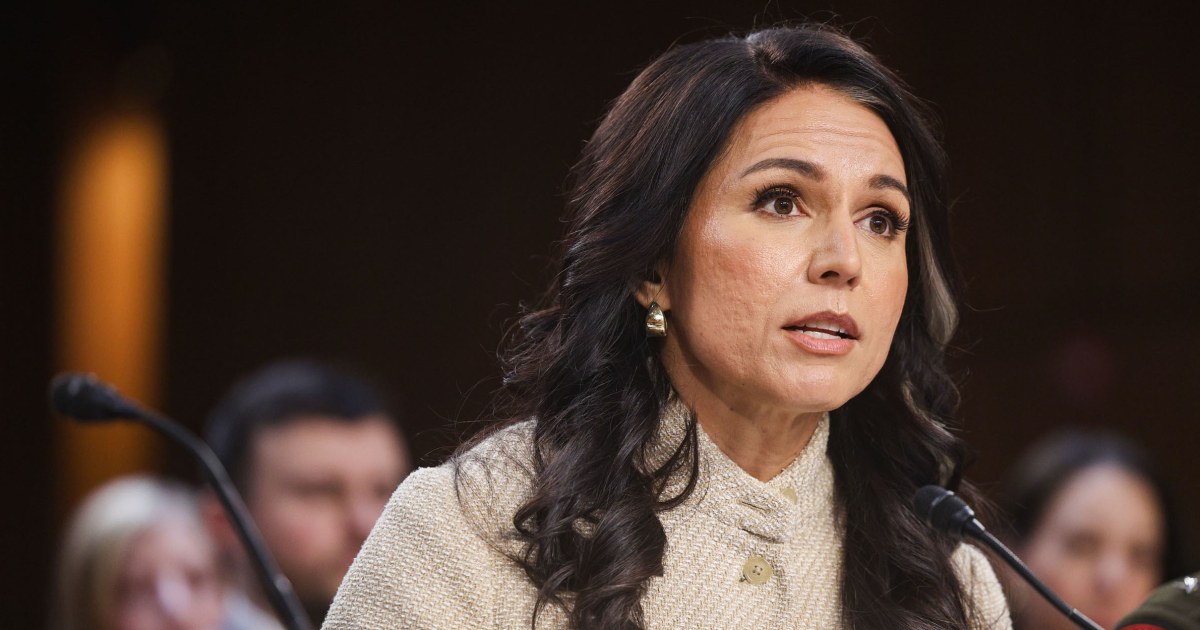
The political temperature in Washington hit boiling point yesterday as Director of National Intelligence Tulsi Gabbard faced a Senate hearing, pointedly deflecting questions about whether Iran's nuclear program poses an “imminent threat.” Her refusal to explicitly endorse the White House's rationale for the recent war on Iran—which began February 28—has sparked renewed speculation about her standing within President Donald Trump's administration.
During the tense exchange, Gabbard notably omitted crucial language from her prepared remarks, which stated that Iran had not attempted to rebuild its uranium enrichment capability post-U.S. airstrikes in June. This assessment directly contradicts President Trump's assertions that Iran was actively restarting its nuclear program. When pressed on the omission, Gabbard cited “time was running long.”
Adding fuel to the fire, the hearing followed the dramatic resignation of National Counterterrorism Center Director Joe Kent, who protested the Iran war, arguing there was “no imminent threat.” Kent himself is under FBI investigation for alleged classified information leaks. Meanwhile, Trump issued a chilling threat: “massively blow up the entirety” of the South Pars gas field if Iran attacks Qatar again, even as Brent crude oil soared past $116 a barrel, a nearly 10% jump in a single day, reflecting widespread anxiety over global energy supplies.
Private Prison Scandal: Lewandowski Accused in Alleged 'Pay-for-Play' Scheme
Separately, a major scandal involving alleged influence peddling is shaking up the Department of Homeland Security. Reports reveal that GEO Group founder George Zoley was allegedly approached twice by Corey Lewandowski—a close Trump ally and former “de facto chief of staff” to Homeland Security Secretary Kristi Noem—with requests for payment in exchange for protecting and expanding GEO Group’s lucrative federal contracts.
GEO Group, a titan in the private prison industry, stood to gain immensely from Trump's mass deportation policies, with contracts already exceeding $1 billion annually. However, Zoley reportedly refused Lewandowski's requests. In the aftermath, GEO Group saw its contract lengths shrink, and a senior DHS official was allegedly told by Lewandowski not to award more contracts to the company. The fallout culminated in December 2025, when GEO Group failed to secure a crucial $121 million contract. Now, lawmakers and President Trump himself are demanding answers regarding Lewandowski's role in federal contracting.
Unlikely Alliance: Moms for Liberty & Teachers Unions Battle Big Tech in Schools
In a surprising turn, political adversaries are finding common ground. Conservative activist group Moms for Liberty, known for branding teachers unions as an “education mafia,” is now teaming up with former foes to combat the pervasive influence of education technology in public schools.
Across the nation, Moms for Liberty chapters and other conservative organizations are uniting with local teachers unions and liberal parents. Their shared mission? To push for strict limits on children's screen time in the classroom. This burgeoning, bipartisan partnership—a “chance to best provide for their children,” according to parents and activists—underscores growing parental concerns about the impact of digital devices on student well-being and learning. While teachers unions remain somewhat split on the issue, many Moms for Liberty members are eager to collaborate with those who align with their fight to remove excessive tech from schools.
March Madness Check-Up: Is Cinderella Dead?
College basketball fans, prepare for a candid assessment! NBC News’ chief data analyst Steve Kornacki dives deep into this year’s NCAA Tournament, posing a provocative question: Has the magic of Cinderella stories vanished? Kornacki argues that dramatic changes to the sport may have fundamentally altered the tournament itself, halting the parade of underdogs. If top seeds continue to dominate, he warns, the pattern will become “all the more apparent.”
Kornacki also highlights three potential first-round upsets to watch: No. 12 seed Akron vs. No. 5 seed Texas Tech, No. 13 seed Troy vs. No. 4 seed Nebraska, and No. 13 seed California Baptist vs. No. 5 seed Kansas. As for his national championship pick, after a streak of misses, Kornacki hedges his bets, opting for the “depth and balance of long-overdue Arizona.”
Mexico's Street Soccer Craze: Fueling World Cup Dreams
Beyond the political headlines and sports debates, a heartwarming cultural phenomenon is taking hold in Mexico. In the bustling streets of Mexico City, “Reta Mexa” is sparking a street soccer craze, bringing communities together with impromptu matches. No goalkeepers, no grass, no referees—just pure, unadulterated passion for “fútbol.”
Founded a few months ago by a small group of soccer fans, Reta Mexa invites fellow enthusiasts to gather every Friday for informal games in different neighborhoods. “I have a son who loves soccer, and I see that he and his generation have become stuck at home,” explains co-founder Roy Jiménez. The initiative has not only caught on with locals but has also delighted tourists who eagerly join in, embodying Mexico's deep love of the game and the intense excitement building for the 2026 FIFA World Cup.
Key Takeaways
| Topic | Summary |
|---|---|
| Tulsi Gabbard / Iran | DNI Gabbard deflects "imminent threat" questions on Iran, contradicts Trump's statements, and faces scrutiny over war stance. Ex-NCTC director resigns in protest. |
| Lewandowski / GEO Group | Corey Lewandowski allegedly sought payments from private prison giant GEO Group for DHS contract protection; company contracts subsequently shrank, sparking investigation. |
| Ed Tech in Schools | Conservative Moms for Liberty and some teachers unions form an unlikely alliance to reduce screen time and fight Big Tech's influence in public schools. |
| NCAA Tournament | Analyst Steve Kornacki questions the future of "Cinderella stories" in college basketball, identifies potential upsets, and picks Arizona for the championship. |
| Mexico Street Soccer | "Reta Mexa" fuels a growing street soccer movement in Mexico City, fostering community and building excitement for the 2026 FIFA World Cup. |
Frequently Asked Questions (FAQ)
Q: Why is Tulsi Gabbard's testimony significant?
A: Her refusal to affirm an "imminent threat" from Iran, her omission of contradictory information, and her general reluctance to endorse the war stand in contrast to other cabinet officials, raising questions about internal administration disagreements and intelligence assessments.
Q: What are the implications of the Corey Lewandowski allegations?
A: If proven, the allegations suggest a serious case of influence peddling and potential corruption at high levels of government, impacting federal contracting processes and raising ethical concerns about former officials leveraging their connections for personal gain.
Q: Why are Moms for Liberty and teachers unions working together on ed tech?
A: Despite their ideological differences, both groups share concerns about excessive screen time for children in schools and the impact of education technology on learning and well-being. This common ground has led to an unexpected bipartisan effort to advocate for limits.
Q: What does Steve Kornacki mean by "Cinderella stories" ending in the NCAA?
A: He suggests that recent changes in college basketball, such as the transfer portal and NIL deals, might be strengthening top programs and making it harder for lower-seeded "mid-major" teams to upset powerhouses in the NCAA Tournament, reducing the frequency of underdog triumphs.
Q: How is street soccer in Mexico connected to the World Cup?
A: The informal "Reta Mexa" matches in Mexico City are not only fostering community and a love for the game but also tapping into and amplifying the widespread excitement and anticipation for the 2026 FIFA World Cup, which Mexico will co-host, reflecting the country's deep soccer culture.
