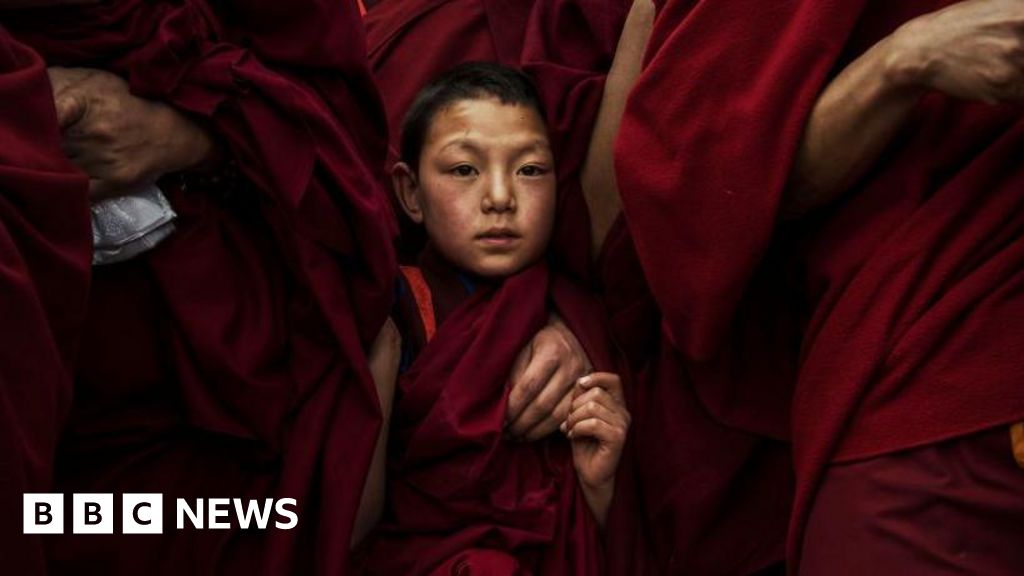
Beijing claims a new "ethnic unity" law will unify its vast population. But critics warn it's a chilling blueprint for the forced erasure of minority cultures, languages, and identities, sparking alarm across the globe.
China's "Unity" Law: Integration or Erasure?
China has just approved a sweeping new law, deceptively titled to promote "ethnic unity." On paper, it aims to foster integration among China's 56 officially recognized ethnic groups, largely dominated by the Han Chinese majority. The government states its purpose is to enhance job prospects for minorities and promote "modernization through greater unity."
However, human rights advocates and international observers are sounding the alarm. This legislation, passed as the annual parliamentary session concluded, is seen as a dramatic escalation in Beijing's decades-long campaign to force minority groups to abandon their unique heritage and language in favor of dominant Han culture – a process often termed "sinicization."
Mandarin Mandate: A Direct Assault on Language
One of the most contentious aspects of the new law is its mandate for universal Mandarin education. Every child in China will now be taught Mandarin from pre-kindergarten through high school. This marks a radical departure from previous policies, which allowed students in regions like Tibet, Xinjiang, and Inner Mongolia to study much of their curriculum in their native languages.
"The law is consistent with a dramatic recent policy shift, to suppress the ethnic diversity formally recognised since 1949," states Magnus Fiskesjö, an associate professor of anthropology at Cornell University. "The children of the next generation are now isolated and brutally forced to forget their own language and culture."
Targeting Communities and Dissent
Beyond language, the law grants the state unprecedented power to dismantle minority-heavy neighborhoods and prosecute parents. It provides a legal basis to target guardians who may instil "detrimental" views in children that could affect "ethnic harmony," and calls for "mutually embedded community environments." Analysts fear this could lead to the forced relocation and breakup of minority communities, further eroding their cultural ties.
A Pattern of Repression: Voices from the Ground
This new law isn't an isolated incident but rather an intensification of existing state-led assimilation policies, particularly under Chinese leader Xi Jinping. For years, Beijing has faced accusations of restricting the rights of minority groups in regions notorious for human rights abuses.
Tibet: Monasteries Under Siege
In Tibet, authorities have systematically arrested monks and seized control of monasteries to prevent the worship of the Dalai Lama. Reports from inside these regions paint a grim picture. "We Tibetans are denied basic human rights. The Chinese government continues to oppress and persecute us," one monk bravely shared, speaking of living under constant fear and intimidation.
Xinjiang: The Horror of "Re-education" Camps
Perhaps the most widely condemned instance of China's assimilation efforts is in Xinjiang. Here, human rights groups have extensively documented the detention of over a million Uyghur Muslims in what Beijing calls "re-education" camps. The UN has accused China of grave human rights violations, with reports from the BBC and others detailing allegations of sexual abuse, forced sterilisation, and systematic cultural indoctrination within these facilities.
Inner Mongolia: Standing Up for Language
Even in Inner Mongolia, where ethnic Mongolians comprise a smaller proportion of the population, the resistance is palpable. In 2020, rare rallies erupted as parents protested measures to reduce Mongolian language teaching. Many held their children back from school, viewing the policy as a direct threat to their cultural identity. Beijing swiftly cracked down on this dissent.
Expert Warnings: Xi Jinping's Vision of a "Unified" China
While China's constitution theoretically protects the right of ethnicities to use and develop their own languages and self-rule, critics argue this new law solidifies Xi's authoritarian push towards complete assimilation.
Allen Carlson, an associate professor of government at Cornell University, observes, "The law makes it clearer than ever that in Xi Jinping's PRC non-Han peoples must do more to integrate themselves with the Han majority, and above all else be loyal to Beijing."
Professor Ian Chong of the National University of Singapore highlights the underlying message: "It is easy to read this language as meaning that minority languages and cultures are backward and impediments to advancement." He suggests Xi's approach aims to create a "great and strong Chinese nation with a northern Han core," where minorities are seen as "derivative," leading to "further rounds of increasing control, diminution, and even crackdowns on minority cultures and languages."
The new "ethnic unity" law is more than just legislation; it's a powerful tool in Beijing's arsenal to reshape the very fabric of its diverse population. For the millions of Uyghurs, Tibetans, Mongolians, and others, it represents a chilling threat to their existence as distinct cultural groups.
Key Takeaways: China's Ethnic Unity Law
| Aspect | Impact / Implication |
|---|---|
| Mandatory Mandarin Education | Replaces native language education, forcing cultural assimilation from an early age. |
| Legal Basis for Prosecution | Parents can be prosecuted for instilling "detrimental" views, eroding parental rights and freedom of expression. |
| "Mutually Embedded Communities" | Could lead to the forced breakup and relocation of minority-heavy neighborhoods, disrupting cultural cohesion. |
| Accelerated "Sinicization" | Formalizes and intensifies Beijing's long-term goal of assimilating ethnic minorities into dominant Han culture. |
| Global Human Rights Concerns | Draws parallels to existing human rights abuses in Xinjiang, Tibet, and Inner Mongolia, signaling increased repression. |
Frequently Asked Questions (FAQ)
Q: What is China's new "ethnic unity" law?
A: It's a recently approved law that Beijing claims will promote integration among its 56 ethnic groups. However, critics argue it's a tool for forced assimilation, particularly targeting the language and culture of minority groups like Uyghurs, Tibetans, and Mongolians.
Q: How does the law impact minority languages?
A: The law mandates that all children, from pre-kindergarten through high school, must be taught Mandarin. This effectively replaces native language instruction that was previously available in minority regions, leading to concerns about the erosion of indigenous languages.
Q: What are "mutually embedded community environments"?
A: This term, used in the new law, is interpreted by analysts as a potential mechanism to break up and relocate minority-heavy neighborhoods. The aim appears to be to reduce cultural concentration and promote integration with the Han majority, often through forced means.
Q: Has China pursued similar policies before?
A: Yes, this law is seen as an intensification of China's long-standing "sinicization" policy, which aims to assimilate ethnic minorities into the dominant Han culture. This policy has been significantly accelerated under President Xi Jinping, with documented abuses in regions like Xinjiang and Tibet.
Q: Why is this law controversial internationally?
A: Human rights organizations and governments worldwide view the law as a violation of minority rights, cultural freedom, and self-determination. It's seen as a direct threat to the existence of distinct ethnic identities within China and a tool for systematic repression, drawing parallels to recognized human rights violations.
