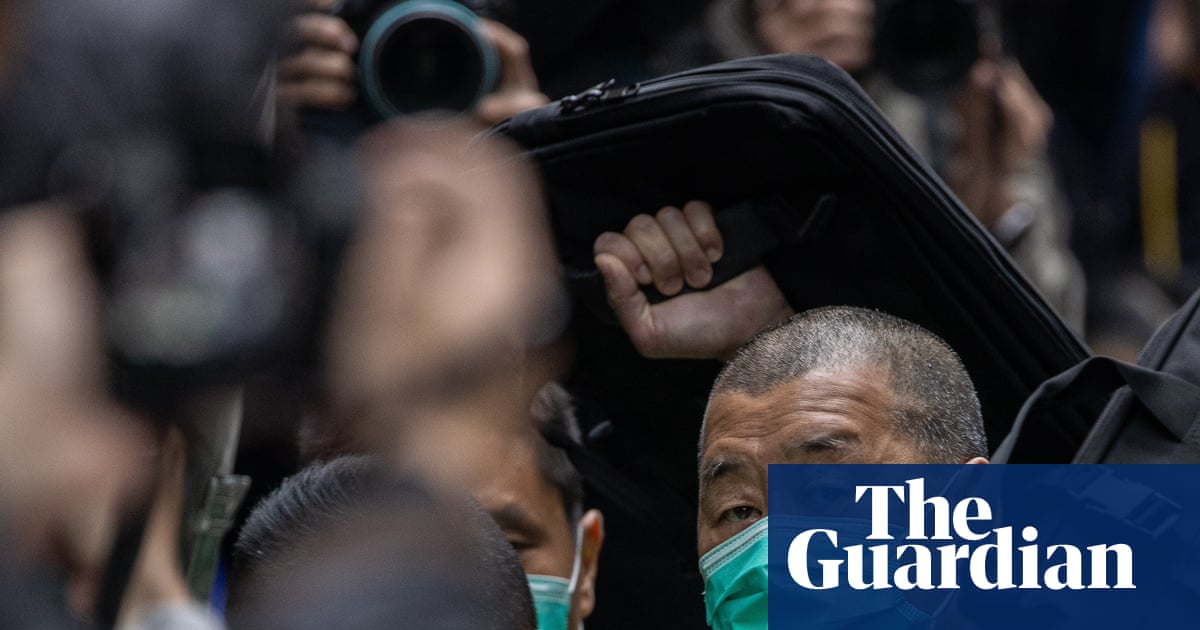
A chilling fear echoes from a Hong Kong prison cell: 78-year-old Jimmy Lai, a British citizen and staunch pro-democracy advocate, dreads the thought of dying alone, separated from his family. His recent sentencing to an unprecedented 20 years under Hong Kong's controversial National Security Law has ignited a global firestorm, with international bodies declaring him the world's highest-profile political prisoner.
| Key Insight | Details |
|---|---|
| Who is Jimmy Lai? | 78-year-old British citizen, founder of pro-democracy newspaper Apple Daily, outspoken critic of the Chinese Communist Party. |
| The Sentence | 20 years in Hong Kong prison for "national security" convictions, including sedition and colluding with foreign forces. |
| Global Reaction | UK, UN, EU, and human rights groups condemn the verdict, calling it politically motivated and a violation of international law. |
| Personal Impact | Lai fears dying alone; his son describes the sentence as an "effective life sentence." |
| Significance | Lai is now considered the world’s most high-profile political prisoner and a symbol of eroding media freedom in Hong Kong. |
A "Life Sentence" for Dissent
For Jimmy Lai, 78, a 20-year jail term is effectively a death sentence. The revered media tycoon, known for founding the now-defunct Apple Daily newspaper, was convicted on charges of conspiracy to produce seditious material and two counts of conspiracy to collude with foreign forces.
Critics argue these charges are a thin veil for silencing a prominent voice against Beijing. The UK foreign secretary, Yvette Cooper, powerfully stated that the prosecution was "politically motivated" under a law "imposed to silence China’s critics."
The Draconian Grip of the National Security Law
Lai's ordeal began with his arrest in 2020, weeks after Beijing imposed the sweeping National Security Law (NSL) on Hong Kong. This law, introduced following widespread pro-democracy protests, has been condemned by many as a tool to criminalize dissent and dismantle the city's promised autonomy.
The UN rights chief, Volker Türk, has called the verdict "incompatible with international law" and highlighted how the NSL’s vague provisions enable violations of human rights. This harsh sentence, the longest for an NSL case, starkly contrasts with Beijing's narrative of restoring stability.
"He Fears Dying Alone": A Family's Plea
The human toll of this legal battle is devastatingly personal. Lai's son, Sebastien, expressed a profound fear that his father "fears not seeing his family again, he fears dying alone."
Despite the immense emotional burden, Sebastien found some "relief" that the "farce" of the trial had concluded. He also questioned the UK's diplomatic efforts, describing recent visa-free travel announcements as "tone deaf" while his father remains incarcerated.
Global Condemnation and Calls for Release
The international community's response has been swift and severe. Beyond the UN, the European Union "deplores" the outcome and demands Lai's immediate and unconditional release, echoing sentiments from Reporters Without Borders, who declared it a "dark day for those who care about free press."
While the UK government states it continues to raise Lai's case at the "highest levels," the actual progress towards his release remains unclear. Sebastien Lai’s poignant question lingers: "If we can’t even get my father out, what does this relationship signify?"
Hong Kong and China: "Justice Is Done"
In stark contrast to the global outcry, Hong Kong and Chinese authorities have welcomed the sentence. Hong Kong’s Chief Executive, John Lee, asserted that Lai "has committed numerous heinous crimes" and that the sentence "manifests that the rule of law is upheld and justice is done."
China’s foreign ministry spokesperson, Lin Jian, mirrored this sentiment, labeling Lai the "mastermind" behind 2019-2020 unrest and dismissing international concerns as interference in internal affairs. This stance underscores the widening chasm between Beijing's interpretation of justice and international human rights standards.
Frequently Asked Questions (FAQ)
Q1: Who is Jimmy Lai and why is his case significant?
Jimmy Lai is a 78-year-old British citizen, a prominent pro-democracy activist, and the founder of the popular Hong Kong newspaper Apple Daily. His case is highly significant because he is considered the most high-profile critic of the Chinese Communist Party in Hong Kong, and his 20-year sentence under the National Security Law is seen globally as a severe blow to press freedom and human rights in the semi-autonomous territory.
Q2: What is Hong Kong's National Security Law?
The National Security Law (NSL) was imposed by Beijing on Hong Kong in 2020 in response to widespread pro-democracy protests. Critics argue it criminalizes dissent and has been used to suppress political opposition, erode freedoms, and bypass Hong Kong's traditional legal system. Its vague provisions make it a powerful tool for authorities to target perceived threats to stability.
Q3: What has been the international response to Lai's sentencing?
The international response has been overwhelmingly condemnatory. The United Nations, the United Kingdom, the European Union, and numerous human rights organizations have denounced the sentence as politically motivated, incompatible with international law, and a violation of human rights. They have called for Lai's immediate and unconditional release, highlighting concerns over the rule of law and the erosion of freedoms in Hong Kong.
