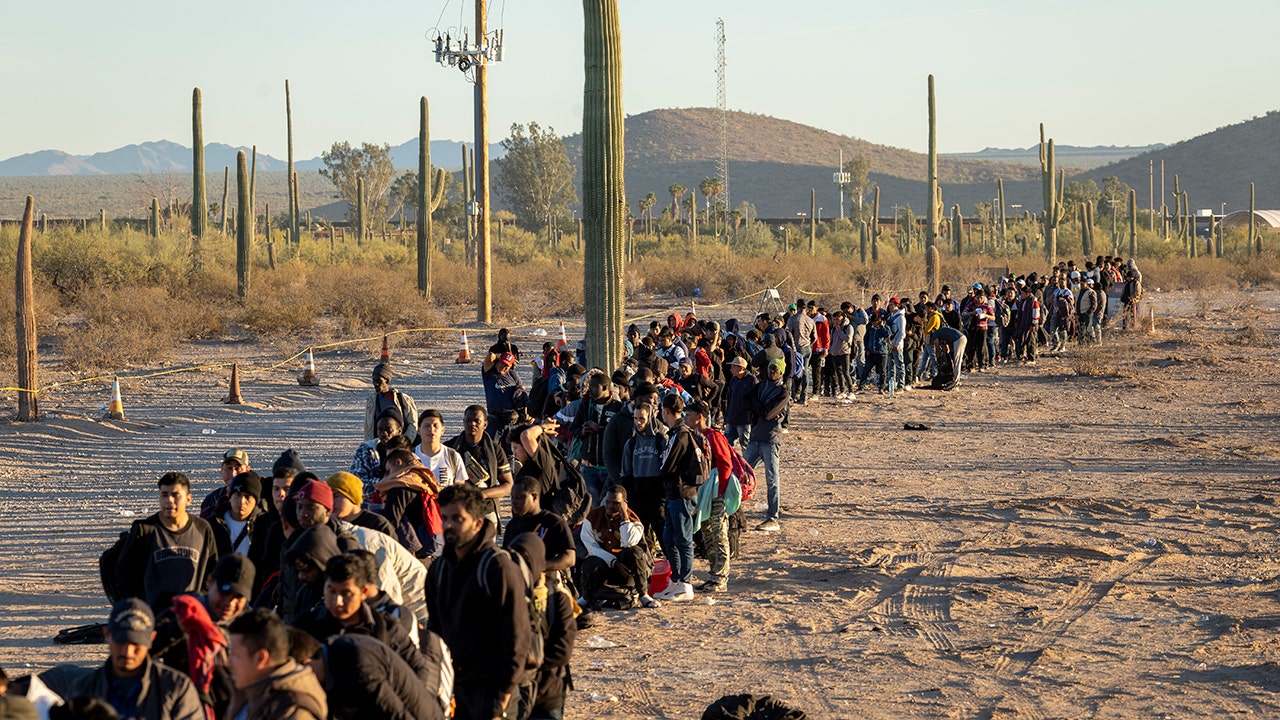
America's borders are not just lines on a map; they're the new front line in a hidden war, where global population shifts and financial flows are being weaponized against U.S. interests.
| Key Insight | Details |
|---|---|
| Migration's Strategic Shift | Large-scale migration is no longer solely a humanitarian issue; it's intricately linked to national security, economic stability, and state capacity. |
| Remittances as an Economic Weapon | Billions of dollars in remittances leave the U.S. annually, stabilizing foreign regimes and potentially undermining U.S. labor markets and sovereignty. |
| 'Gray-Zone' Conflict | Population movements and financial transfers are leveraged by foreign states as tools of influence and political pressure, often below the threshold of overt conflict. |
Even outspoken figures like Joe Rogan, despite his recent criticisms of ICE, now argue that agency raids are ultimately necessary. He points to millions of undocumented migrants entering the U.S., some with violent criminal records, as a direct consequence of policies perceived as permissive.
The New Geopolitics of Migration
Washington is waking up to a stark reality. The State Department's recent decision to freeze visa processing for nationals from over 75 countries, including Somalia, Iran, and Russia, signals a major shift. Migration is no longer seen just through a humanitarian lens; it's now a critical component of national security, economic stability, and state capacity.
In today’s volatile landscape of hybrid warfare and gray-zone conflicts, the movement of populations can be deliberately used as a powerful instrument. It can project state influence, serve as a means of economic survival, and provide political leverage — often without any formal declaration or central coordination. These dynamics inflict long-term, asymmetric effects on host nations, operating well below the threshold of traditional warfare.
Remittances: A Double-Edged Sword for America
For many origin states battling corruption, weak institutions, or limited opportunities, exporting labor has become a de facto economic lifeline. Rather than undertaking difficult internal reforms, these governments frequently tolerate or even quietly incentivize outward migration. Foreign nationals working abroad then become a steady source of income through remittances.
These financial flows are predictable, recurring, and largely sanction-resistant. They provide crucial support to both households and governments, all without demanding transparency or structural change. While individual remittances are not inherently hostile and often support vulnerable communities, the aggregate effects at an industrial scale are undeniable.
According to World Bank estimates, officially recorded remittances to low- and middle-income countries hit roughly $685 billion in 2024, often surpassing foreign direct investment. The United States stands as the world’s largest source of outbound remittances, with annual outflows between $80 billion and $90 billion. Independent analyses suggest the U.S. economy loses at least $200 billion annually from these outflows, a figure that has dramatically risen since 2019.
Mexico alone received over $64 billion in remittances last year, predominantly from the U.S., establishing it as one of the country’s largest sources of foreign revenue. In nations like El Salvador, Haiti, and Somalia, remittances account for 20% to 25% of their GDP, transforming them from incidental household transfers into macroeconomic pillars.
When Economic Reliance Becomes Political Leverage
Governments heavily reliant on these inflows have little incentive to facilitate the return of their citizens, including those unlawfully present in the United States. Large-scale repatriation would disrupt a critical revenue stream, reintroduce unemployment, and create significant fiscal and political pressure at home. Consequently, some sending states have been known to delay travel documents, obstruct deportations, or maintain permissive border policies that encourage onward migration.
While immigrant communities contribute to the U.S. in countless ways, the heavy reliance on cheap labor in sectors like construction and agriculture can suppress wages, distort competition, and disadvantage American workers. Over time, this contributes to a more stratified labor market within the United States.
Compounding the issue, the same transnational networks that facilitate large-scale migration can often overlap with illicit activities, including narcotics trafficking, money laundering, and labor exploitation. Remittance channels and money-service businesses can be exploited, blending legitimate earnings with criminal proceeds and complicating enforcement efforts.
Over the long term, this economic dependence on foreign earnings, combined with family ties abroad, creates vulnerabilities. It can expose communities to coercion or influence by origin governments, criminal organizations, or other hostile actors. What starts as mere economic reliance can swiftly evolve into powerful leverage against U.S. interests.
The Gray-Zone Threat to American Sovereignty
Through the lens of gray-zone conflict, remittances are far from neutral financial transfers. They function as an asymmetric economic weapon, actively weakening U.S. labor markets, eroding the rule of law, and stabilizing regimes that may act contrary to American interests. In this new form of conflict, the rule of law itself becomes contested terrain.
Until weaponized mass migration and the resulting remittance dependency are fully recognized as elements of hybrid warfare, the United States risks financing systems that undermine its own sovereignty, economic resilience, and social cohesion. Acknowledging these aggregate effects as part of broader hybrid pressures doesn't impugn individual immigrants; it simply requires recognizing that at this scale, the impact is undeniable.
FAQ: Understanding the New Migration Landscape
Q1: How are remittances considered an 'economic weapon' against the U.S.?
A: Remittances stabilize foreign regimes, including those that may act against U.S. interests, by providing a steady, sanction-resistant revenue stream. This reduces their incentive to facilitate repatriation of their citizens, while diverting billions of dollars annually from the U.S. economy, potentially depressing wages and distorting labor markets.
Q2: What is 'gray-zone conflict' in the context of mass migration?
A: 'Gray-zone conflict' refers to adversarial actions that fall below the threshold of overt warfare. In migration, this means foreign states or actors use population movements and financial transfers as tools for political leverage, economic influence, or to create strategic pressures on host nations, without direct military engagement.
Q3: What steps is the U.S. government taking to address these challenges?
A: The article highlights the State Department's recent decision to freeze visa processing for nationals from over 75 countries, indicating a policy shift towards viewing migration through a national security lens. It also suggests that a broader recognition of weaponized migration as hybrid warfare is crucial for future policy development to protect U.S. sovereignty and economic resilience.
