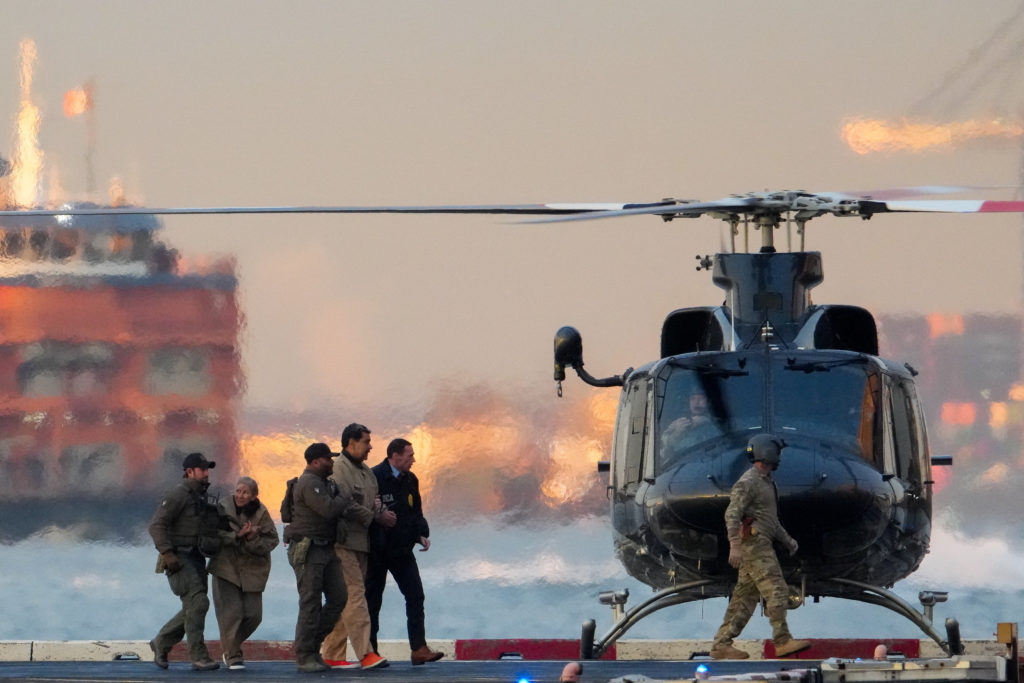
In an electrifying turn of international events, Nicolás Maduro, Venezuela's former strongman, made his dramatic first appearance in a U.S. courtroom today, facing explosive narco-terrorism charges that could reshape geopolitical power dynamics and set a powerful precedent for international law.
| Key Detail | Description |
|---|---|
| Defendant | Nicolás Maduro (deposed Venezuelan President) & Cilia Flores (wife) |
| Charges | Narco-terrorism, conspiracy, drug trafficking, money laundering |
| Location | Daniel Patrick Moynihan U.S. Courthouse, Manhattan, New York |
| Significance | Unprecedented trial of a former head of state, challenges international immunity, potential life sentence |
The Unprecedented Arrival: From Brooklyn Jail to Manhattan Court
The journey to the courthouse was as dramatic as the charges themselves. Early Monday, Maduro and his wife were transported under armed guard from a Brooklyn jail, commencing a carefully orchestrated, high-security transfer.
A motorcade whisked them to a nearby athletic field, where Maduro, reportedly limping, boarded a waiting helicopter. This aerial transit across New York harbor culminated at a Manhattan heliport, followed by an armored vehicle ride directly into the courthouse garage.
Legal Showdown: The Battle for Sovereign Immunity
At the heart of Maduro's defense will be a potent legal challenge: his lawyers are expected to assert sovereign immunity, arguing that as a former head of state, he is exempt from U.S. prosecution. This mirrors the unsuccessful defense of Panamanian strongman Manuel Noriega in 1990.
However, the U.S. government has long refused to recognize Maduro as Venezuela's legitimate leader, especially following his disputed 2024 reelection. This stance fundamentally undermines his claim to immunity within American legal jurisdiction.
Explosive Charges and Cartel Allegations
The 25-page indictment, unsealed Saturday, paints a grim picture, accusing Maduro and his inner circle of conspiring with drug cartels to flood the U.S. with thousands of tons of cocaine. If convicted, the consequences could be life-altering, with a potential sentence of life in prison.
Further allegations include ordering kidnappings, beatings, and murders to protect their alleged drug empire. Maduro's wife, Cilia Flores, faces accusations of accepting hundreds of thousands in bribes to facilitate high-level drug trafficker meetings.
Curiously, while the indictment claims direct Venezuelan government collaboration with the notorious Tren de Aragua gang, an April U.S. intelligence assessment, compiled from 18 agencies, found no evidence of such coordination. This discrepancy could become a focal point in the intense legal battle ahead.
Trump's Bold Stance & Escalating Regional Tensions
The capture and trial unfold against a backdrop of aggressive U.S. foreign policy rhetoric. President Trump, fresh from his own legal woes, explicitly stated the U.S. would "run" Venezuela temporarily, though Secretary of State Marco Rubio later clarified this would focus on enforcing an "oil quarantine."
Trump also used the opportunity to publicly criticize Colombian President Gustavo Petro, labeling him a "sick man who likes making cocaine and selling it to the United States." He demanded "total access" to Venezuela from its interim president, Delcy Rodríguez, threatening severe consequences if denied.
Venezuela's Shifting Tones
From Venezuela, reactions have been mixed and evolving. Interim President Delcy Rodríguez initially demanded Maduro's return but late Sunday struck a more conciliatory tone on social media, inviting collaboration and "respectful relations" with the Trump administration.
Before his capture, Maduro and his allies frequently dismissed U.S. hostility as a thinly veiled lust for Venezuela's vast oil and mineral resources, a narrative now complicated by the direct legal action.
What's Next? The Road Ahead
Maduro's first appearance is merely the opening salvo in what is anticipated to be a prolonged and complex legal fight. The practicalities of his defense are already complicated by years of U.S. sanctions, making it challenging for him to legally secure American legal representation without Treasury Department approval.
With his wife, Cilia Flores, and other high-ranking officials also indicted, the trial promises to be a riveting examination of international justice, sovereign power, and the global war on drugs. The world watches to see if American justice will truly deliver on its promise of a fair trial, even for those once considered untouchable.
Frequently Asked Questions (FAQ)
Q: What are the main charges against Nicolás Maduro?
A: Nicolás Maduro faces serious federal charges including narco-terrorism, conspiracy to commit narco-terrorism, drug trafficking, and money laundering. These charges allege a long-standing collaboration with drug cartels to transport cocaine into the United States.
Q: Can Maduro claim diplomatic immunity in a U.S. court?
A: Maduro's lawyers are expected to argue for sovereign immunity as a former head of state. However, the U.S. government does not recognize him as Venezuela's legitimate leader, particularly after his disputed 2024 reelection, which significantly weakens his claim to immunity in the American legal system.
Q: What is the potential sentence if Maduro is convicted?
A: If Nicolás Maduro is convicted on the narco-terrorism and drug trafficking charges, he could face a severe sentence, including the possibility of life in prison under U.S. federal law.
