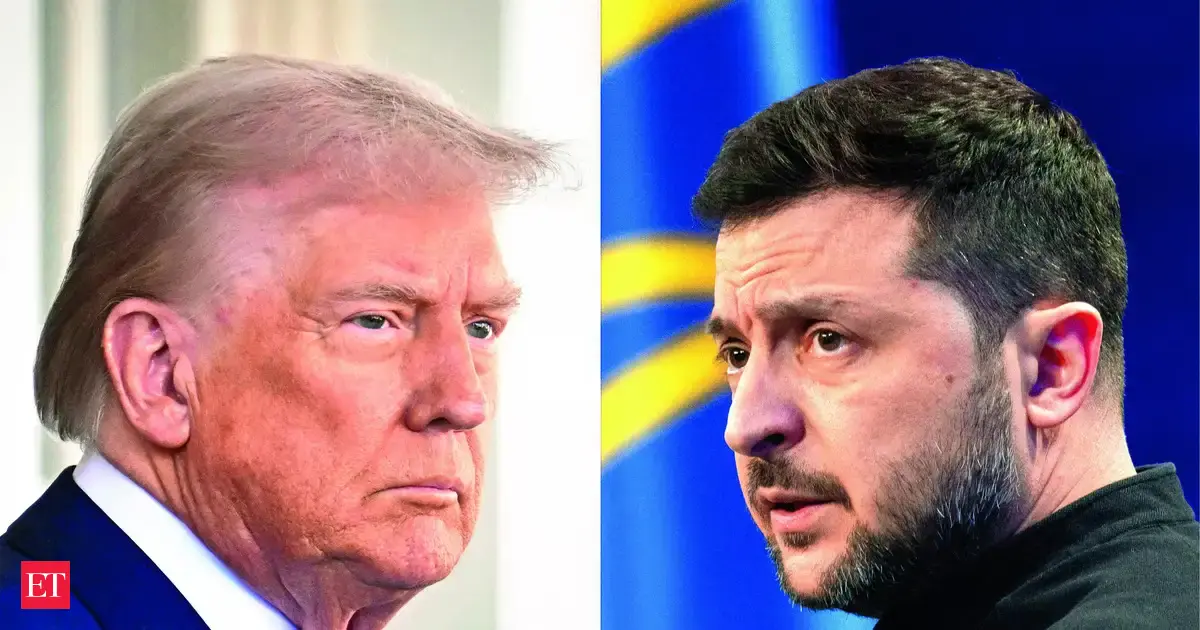
- A critical face-to-face meeting between U.S. and Ukrainian leadership is set for Sunday in Florida, occurring just after a significant Russian missile and drone assault on Kyiv.
- Central to discussions is Ukraine's urgent, and previously denied, request for long-range Tomahawk missiles, a point of contention since October.
- The summit aims to advance a 20-point peace framework, a product of extensive negotiations, though it currently lacks Moscow's endorsement.
Florida, USA – In a tense geopolitical landscape, the leaders of the United States and Ukraine are slated for a crucial meeting this Sunday, a diplomatic encounter intensified by recent escalations. Set for 1:00 PM (1800 GMT), the summit marks their first in-person dialogue since October, a period that saw the U.S. President decline Ukraine’s plea for sophisticated long-range Tomahawk missiles.
High-Stakes Diplomacy Amidst Escalation
The impending meeting follows weeks of intense, high-level negotiations between Washington and Kyiv, culminating in a proposed 20-point plan aimed at navigating the complex conflict. However, this framework remains unsupported by Moscow, signaling potential hurdles ahead. The timing is particularly poignant, coming on the heels of a massive Russian missile and drone barrage that targeted the Ukrainian capital, Kyiv, underscoring the relentless nature of the ongoing conflict.
The Elusive Tomahawk Request
A recurring theme in the U.S.-Ukraine relationship has been Kyiv’s persistent calls for more advanced weaponry, specifically the potent Tomahawk cruise missiles. Ukraine views these weapons as critical for striking deeper into Russian-held territories and neutralizing key military assets, thereby leveling the playing field. The U.S., however, has maintained a cautious stance, weighing the potential for escalation against the imperative to support Ukraine's defense. This strategic disagreement has been a consistent undercurrent in bilateral discussions, making it a pivotal point for Sunday's talks.
Fast Facts: US-Ukraine Summit
| Event | US-Ukraine Presidential Meeting |
| Scheduled Time | 1:00 PM (1800 GMT) Sunday |
| Location | Florida, USA |
| Immediate Context | Follows massive Russian missile & drone attack on Kyiv |
| Key Agenda Items | Zelenskyy's request for long-range Tomahawk missiles, 20-point peace plan discussion |
| Significance | First in-person encounter since October; crucial for future aid & strategic direction |
Moscow's Unwavering Stance
The 20-point plan, crafted through rigorous diplomatic channels, aims to provide a structured path forward. However, its efficacy is severely limited by the fact that Russia has not approved it. This ongoing lack of consensus from Moscow underscores the profound challenges in achieving any meaningful de-escalation or long-term peace agreement, placing immense pressure on the U.S. and Ukraine to forge a unified and effective strategy.
Frequently Asked Questions (FAQ)
Q: What is the core agenda of the upcoming US-Ukraine meeting?
A: The primary agenda revolves around strengthening Ukraine's defensive capabilities, discussing the 20-point peace plan, and critically, addressing Ukraine's persistent request for advanced long-range Tomahawk missiles to counter Russian aggression more effectively. The meeting also serves as a crucial check-in following weeks of intense negotiations and recent escalations.
Q: Why has the U.S. been hesitant to supply Tomahawk missiles to Ukraine?
A: U.S. hesitations stem from several factors, including concerns about potential escalation with Russia, the logistical complexities of deploying and maintaining such sophisticated weaponry, and the strategic implications of providing weapons that could strike deep inside Russian territory. There's a delicate balance between supporting Ukraine and avoiding direct conflict with a nuclear power.
Q: What is the "20-point plan" mentioned in the context of these discussions?
A: The "20-point plan" is a framework that emerged from weeks of intensive US-Ukraine negotiations, designed to outline potential pathways towards a resolution or at least a de-escalation of the conflict. While its specific details are not fully public, it likely encompasses elements of security guarantees, territorial integrity, and mechanisms for sustained international support, though it notably lacks Moscow's approval, presenting a significant challenge to its implementation.
